GHK-Cu 50mg – Premium Copper Peptide Research Vial | Peptide Core USA
Price range: $34.00 through $51.00
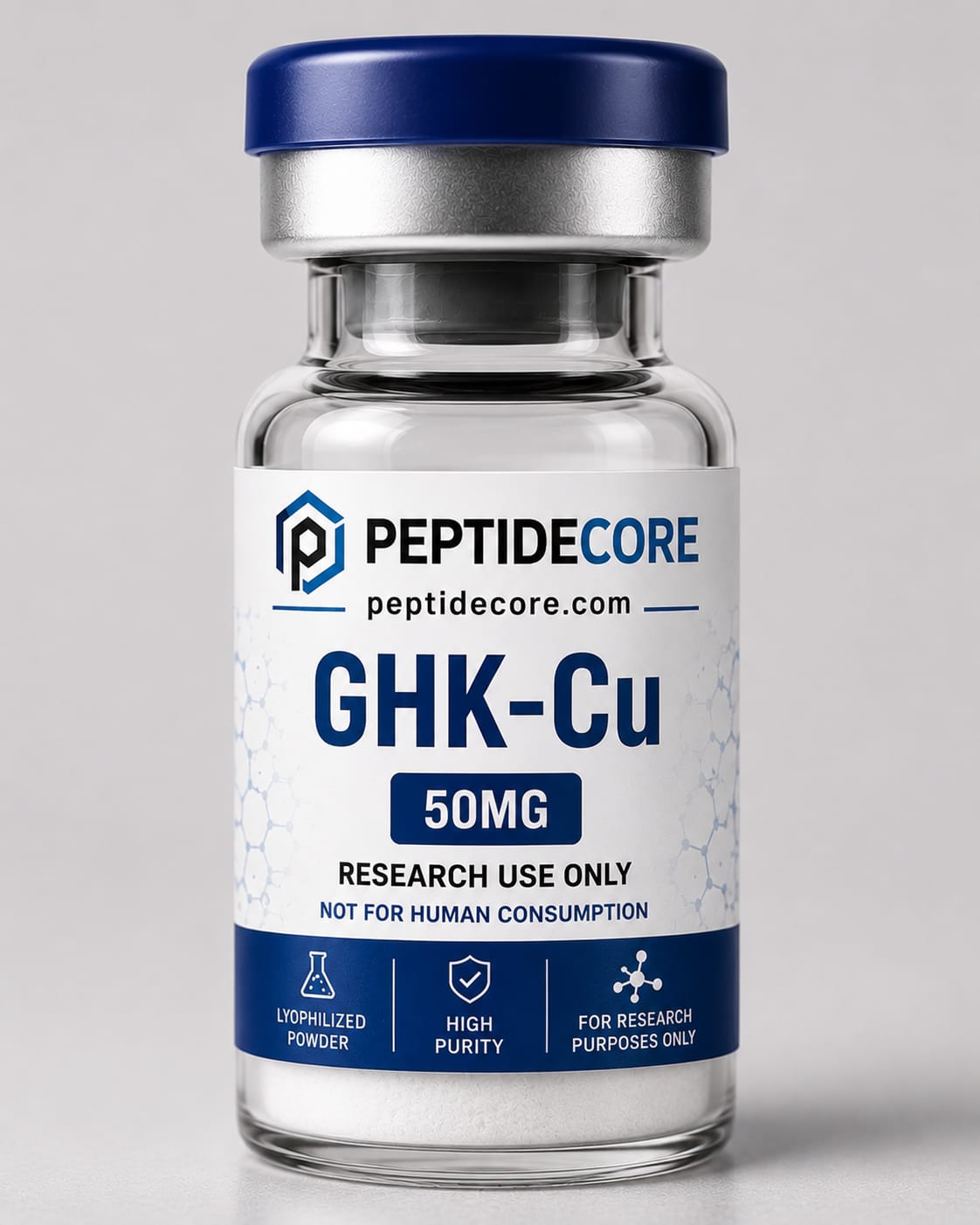
GHK-Cu 50mg (Glycyl-L-Histidyl-L-Lysine Copper Complex) is a naturally occurring copper-binding tripeptide first isolated from human plasma and one of the most extensively researched peptides in regenerative science. Manufactured in the USA and independently verified at ≥99% purity via HPLC and Mass Spectrometry, this lyophilized research-grade vial comes with a full Certificate of Analysis (COA). Sold exclusively for in vitro and laboratory research purposes.
- Purity: ≥99% (HPLC Verified)
- Format: Lyophilized Powder (Vial)
- Quantity: 50mg per vial
- Molecular Formula: C₁₄H₂₄CuN₆O₄
- Molecular Weight: 340.92 g/mol
- CAS Number: 89030-95-5
- Storage: 2–8°C (short-term) / −20°C (long-term)
- Research Use Only — Not for Human Consumption
GHK-Cu 50mg (Glycyl-L-Histidyl-L-Lysine Copper Complex) is one of the most studied and scientifically validated peptides in modern regenerative research. A naturally occurring tripeptide-copper complex first isolated from human blood plasma in 1973 by researcher Loren Pickart, GHK-Cu has since accumulated over four decades of published research — spanning skin biology, wound healing, gene expression modulation, hair follicle science, and tissue repair.
At Peptide Core USA, our GHK-Cu 50mg is produced domestically, lyophilized for maximum stability, and independently tested at ≥99% purity — with a Certificate of Analysis available for every batch.
What Is GHK-Cu?
GHK-Cu, short for Glycyl-L-Histidyl-L-Lysine Copper, is an endogenous tripeptide with a high natural affinity for copper (Cu²⁺) ions. It is found naturally in human blood plasma, urine, and saliva, where it plays a documented role in regulating tissue repair, controlling inflammation, and modulating gene expression. Notably, GHK-Cu concentrations in the body decline significantly with age — dropping from approximately 200 ng/mL in young adults to around 80 ng/mL by age 60 — a pattern that has made it a focal point in aging and regenerative research.
Unlike many synthetic research peptides, GHK-Cu is endogenous — it is a compound the human body naturally produces and uses. This has driven significant interest in understanding how it functions at the cellular and genomic level.
GHK-Cu Molecular Profile
| Property | Details |
|---|---|
| Common Name | GHK-Cu / Copper Peptide GHK |
| Full Chemical Name | Glycyl-L-Histidyl-L-Lysine Copper Complex |
| Also Known As | Copper Tripeptide-1, GHK:Cu, Copper Peptide |
| Molecular Formula | C₁₄H₂₄CuN₆O₄ |
| Molecular Weight | 340.92 g/mol |
| CAS Number | 89030-95-5 |
| Amino Acid Count | 3 (Tripeptide) |
| Sequence | Gly-His-Lys |
| Purity (Peptide Core USA) | ≥99% |
| Testing Methods | HPLC, Mass Spectrometry |
| Form | Lyophilized Powder |
| Vial Size | 50mg |
Research Areas & Proposed Mechanisms
GHK-Cu has been investigated across a remarkably wide range of biological systems. The following summarizes the primary areas of published preclinical and clinical research.
1. Collagen Synthesis & Skin Remodeling
GHK-Cu’s most extensively documented research area is its role in collagen and extracellular matrix synthesis. Cell culture studies have demonstrated that at concentrations as low as 10⁻⁹ mol/L, GHK-Cu increases messenger RNA production for collagen, elastin, proteoglycans, and glycosaminoglycans in dermal fibroblasts.
Key findings from published research include:
- Collagen stimulation: GHK-Cu has been shown to stimulate synthesis of collagen types I, IV, and VII — critical structural proteins for skin integrity and the dermal-epidermal junction.
- Elastin production: The peptide promotes elastin formation alongside collagen, contributing to skin elasticity and firmness in research models.
- Glycosaminoglycan synthesis: GHK-Cu activates production of hyaluronic acid, dermatan sulfate, and chondroitin sulfate — compounds that hydrate skin and provide the scaffolding for collagen deposition.
- Matrix metalloproteinase (MMP) regulation: GHK-Cu modulates MMP activity, breaking down structurally defective collagen while simultaneously stimulating healthy new collagen growth — a balanced remodeling effect documented in multiple studies.
A 1999 human clinical trial comparing topical GHK-Cu to vitamin C and retinoic acid found that GHK-Cu resulted in measurable collagen increases in 70% of study volunteers, outperforming both vitamin C and tretinoin as comparators after one month of use.
2. Wound Healing & Tissue Repair
GHK-Cu has a well-established research history in wound healing, including foundational work that was originally used in FDA-approved wound treatment contexts. Preclinical evidence documents its role in:
- Accelerating wound closure (with some models reporting 40–50% faster closure compared to controls)
- Enhancing epithelialization and wound contraction
- Improving skin graft integration
- Stimulating granulation tissue formation
- Reducing fibrosis and scarring through balanced ECM remodeling
Liposomal delivery studies have further shown that GHK-Cu promotes angiogenesis more effectively than the free peptide form, with enhanced vascular and cellular regeneration markers (CD31 and Ki67) and wound closure shortened to approximately 14 days post-injury in scald models.
3. Gene Expression Modulation
One of GHK-Cu’s most scientifically remarkable properties is its ability to modulate gene expression at scale. Research using the Broad Institute’s Connectivity Map (CMap) database has found that GHK-Cu influences the expression of over 4,000 human genes, including:
- 47 upregulated DNA repair genes
- Genes governing antioxidant defense systems
- Genes involved in extracellular matrix organization
- Inflammatory pathway genes (both pro- and anti-inflammatory regulation)
- Genes linked to cellular senescence and aging
This broad genomic influence has led researchers to characterize GHK-Cu as a pleiotropic epigenetic modulator — capable of resetting aspects of gene expression in aged cells toward patterns more characteristic of younger tissue. This makes it one of the most scientifically complex and multi-pathway peptides in the research literature.
4. Angiogenesis & Vascular Support
Research consistently shows GHK-Cu promotes angiogenesis — the formation of new blood vessels — a property critical to tissue repair and regeneration. The peptide has been shown to:
- Upregulate vascular endothelial growth factor (VEGF) expression in irradiated fibroblasts
- Stimulate basic fibroblast growth factor (bFGF) and TGF-β1 production
- Enhance CD31 expression (a marker of active vascular regeneration)
- Improve circulation and blood supply to damaged tissue in wound models
These vascular effects work synergistically with its collagen and tissue remodeling activity.
5. Anti-Inflammatory & Antioxidant Activity
GHK-Cu has demonstrated meaningful anti-inflammatory and antioxidant properties in research models, including:
- Modulation of pro-inflammatory cytokines (IL-6, IL-1β, TNF-α) in colitis and tissue injury models
- Activation of SIRT1 (a key longevity-associated protein) in experimental colitis research
- Inhibition of STAT3 hyperactivation — a pathway linked to chronic intestinal inflammation and immune dysregulation
- Protection of fibroblasts from oxidative damage, including reversal of radiation-induced impairment at concentrations as low as 10⁻⁹ mol/L
A 2025 study published in Frontiers in Pharmacology demonstrated that GHK-Cu significantly upregulated SIRT1 expression in colon tissue of DSS-induced colitis mice, positioning it as a novel potential SIRT1 activator with implications for intestinal inflammation research.
6. Hair Follicle Research
GHK-Cu has been investigated for its effects on hair follicle biology, with findings suggesting:
- Elongation of hair follicles in ex vivo models
- Enhancement of blood flow to the scalp via angiogenic mechanisms
- Protective effects against androgenetic alopecia through follicle proliferation enhancement
- Anti-inflammatory effects on the scalp follicular environment
These effects are mechanistically distinct from DHT-blocking agents (such as finasteride), operating instead through growth factor stimulation and improved follicular tissue environment.
7. Neuroprotective & Systemic Research
Emerging research has explored GHK-Cu’s potential in:
- Cognitive and neurological health: The peptide’s antioxidant and gene regulation properties have been investigated in the context of neurodegenerative conditions, with studies examining its potential to counteract oxidative stress linked to cognitive aging.
- Cancer biology: GHK-Cu has shown evidence of modulating gene expression in breast cancer (MCF7) and prostate cancer (PC3) cell lines, with published research exploring its effects on cellular proliferation and signaling pathways.
- Gastrointestinal integrity: Research into GHK-Cu’s anti-inflammatory properties in colitis models suggests applications in intestinal barrier function and mucosal repair.
Human & Clinical Research Highlights
- A 12-week randomized clinical trial examining a GHK-Cu facial and eye cream (Leyden et al.) demonstrated measurable anti-aging benefits in human volunteers.
- A human clinical trial showed GHK-Cu stimulated collagen production in 70% of volunteers, outperforming vitamin C and tretinoin (Abdulghani et al., 1999).
- Human plasma GHK-Cu levels follow a consistent age-related decline, with research by Pickart first identifying this pattern and its potential implications for tissue repair capacity in aging populations.
- GHK-Cu’s long history of use in FDA-approved topical wound preparations provides one of the more established human-use research bases among research peptides.
Safety Profile
GHK-Cu has demonstrated a favorable safety profile across decades of research. Cell culture studies show maximal biological activity at extremely low concentrations (10⁻⁹ mol/L), suggesting high potency with a wide therapeutic window. Multiple clinical topical formulations have been well tolerated in human study populations. Preclinical models have consistently shown no significant cytotoxic effects at research concentrations.
Note: GHK-Cu 50mg sold by Peptide Core USA is strictly for in vitro and laboratory research purposes only. This product is not approved by the FDA for injectable or systemic human use outside of compounded or approved topical formats. Researchers should review all applicable regulations before use.
Why Choose Peptide Core USA for GHK-Cu 50mg?
✔ USA-Manufactured — Domestic production, not overseas-sourced ✔ ≥99% Purity — Confirmed by HPLC and Mass Spectrometry ✔ Certificate of Analysis (COA) — Batch-specific documentation included ✔ 50mg Vial — High-value quantity for extended research use ✔ Lyophilized Format — Freeze-dried for maximum shelf life and stability ✔ No Fillers or Additives — Pure copper peptide complex only ✔ Fast Shipping — Same-day or next-day dispatch on in-stock items ✔ Research Support — Our team is available for product and research questions
Storage & Handling Guidelines
- Short-Term Storage: 2–8°C (refrigerator) for up to 4 weeks
- Long-Term Storage: −20°C (freezer); stable for 12–24 months when stored correctly
- Reconstitution: For laboratory use, reconstitute with sterile or bacteriostatic water; standard preparation is 5mL bacteriostatic water per 50mg vial (yields 10mg/mL concentration)
- Protect from Light: Store vials away from UV exposure
- Aliquot for Multiple Uses: Avoid repeated freeze-thaw cycles; divide into single-use aliquots if needed
Product Details at a Glance
| Specification | Detail |
|---|---|
| Product Name | GHK-Cu 50mg |
| Brand | Peptide Core USA |
| SKU | PCA-GHKCU-50MG |
| Quantity | 50mg per vial |
| Form | Lyophilized Powder |
| Purity | ≥99% |
| Molecular Formula | C₁₄H₂₄CuN₆O₄ |
| Molecular Weight | 340.92 g/mol |
| CAS Number | 89030-95-5 |
| Storage | 2–8°C / −20°C (long-term) |
| Certificate of Analysis | Yes — included with every batch |
| Country of Origin | USA |
| Intended Use | Research & Laboratory Use Only |
Legal Disclaimer
GHK-Cu 50mg sold by Peptide Core USA is intended for research and laboratory purposes only. This product is not intended for human or veterinary use, is not a drug or dietary supplement, and has not been evaluated or approved by the U.S. Food and Drug Administration (FDA) for systemic human use. It must not be self-administered or used outside of a licensed research setting. By purchasing this product, you confirm that you are a qualified researcher or licensed professional and that you are using this compound in compliance with all applicable federal, state, and local laws.
Frequently Asked Questions (FAQ)
Q: What is GHK-Cu used for in research? A: GHK-Cu is studied for its roles in collagen synthesis, wound healing, gene expression modulation, angiogenesis, anti-inflammatory activity, hair follicle biology, and neuroprotection across preclinical and some clinical research models.
Q: Is GHK-Cu a natural or synthetic peptide? A: GHK-Cu is an endogenous compound — naturally present in human blood plasma, urine, and saliva. The research form is synthetically produced to match the natural sequence (Gly-His-Lys) complexed with copper (Cu²⁺).
Q: What purity is Peptide Core USA’s GHK-Cu? A: Our GHK-Cu is verified at ≥99% purity via HPLC and Mass Spectrometry, with a Certificate of Analysis available per batch.
Q: How should GHK-Cu 50mg be stored? A: Store lyophilized powder at 2–8°C for short-term use, or −20°C for long-term storage. Protect from light and moisture, and avoid repeated freeze-thaw cycles.
Q: How does a 50mg vial compare to smaller sizes? A: A 50mg vial at a standard 10mg/mL reconstitution yields 5mL of solution — providing approximately 3 months of use at 500 mcg/day dosing in a laboratory setting, making it the most cost-effective format for extended research.
Q: Is GHK-Cu the same as Copper Tripeptide-1? A: Yes. GHK-Cu, Copper Tripeptide-1, and Copper Peptide GHK all refer to the same compound: the tripeptide Glycyl-L-Histidyl-L-Lysine complexed with copper ions.
Q: Does Peptide Core USA ship GHK-Cu pre-mixed? A: No. GHK-Cu is shipped in lyophilized powder form for optimal transit stability and extended shelf life.
| Strenght | 50MG, 100G |
|---|
1 review for GHK-Cu 50mg – Premium Copper Peptide Research Vial | Peptide Core USA
Add a review
Related products
Growth Hormone Peptides
Healing & Recovery Peptides
Anti-Aging Peptides
Immune Support Peptides
Immune Support Peptides
Growth Hormone Peptides
Growth Hormone Peptides
CJC-1295 No DAC 5mg Research Peptide | Premium Quality | PeptideCore USA
Healing & Recovery Peptides
yabohrudrick@gmail.com –
What purity is Peptide Core USA’s GHK-Cu?