GHRP Peptide | Research Grade Growth Hormone Releasing Peptide
Price range: $52.00 through $83.00
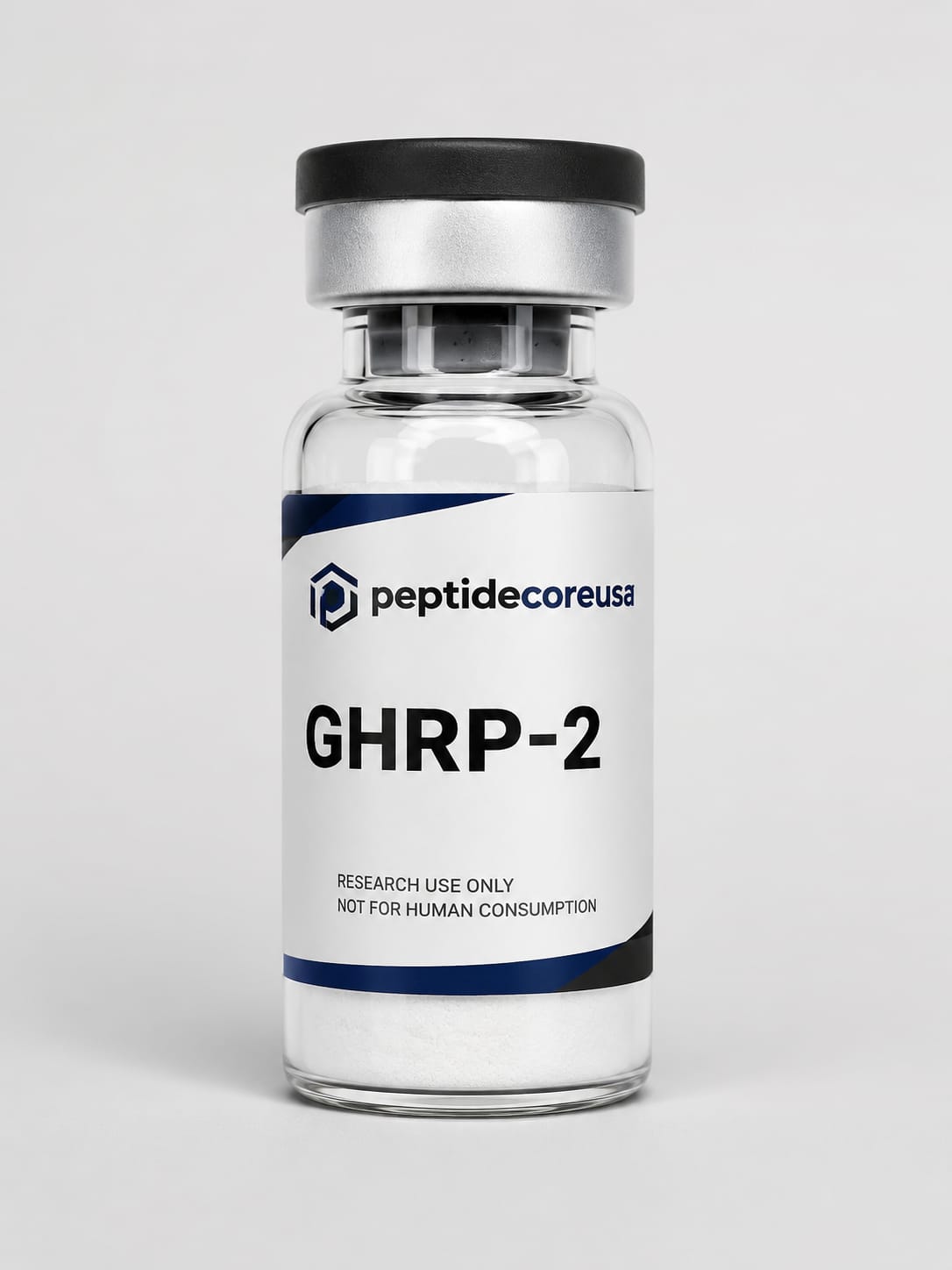
GHRP (Growth Hormone Releasing Peptide) is a premium research-grade peptide manufactured to high purity standards for laboratory and scientific research. It is widely studied for its ability to stimulate endogenous growth hormone release through activation of the growth hormone secretagogue receptor (GHS-R). Each vial is produced under strict quality control and is intended exclusively for research purposes. This product is not for human or veterinary use.
GHRP Peptide
GHRP (Growth Hormone Releasing Peptide): Complete Guide, Benefits, Research Applications, and Storage Information
What Is GHRP?
Growth Hormone Releasing Peptides (GHRPs) are a class of synthetic peptides designed to stimulate the release of growth hormone (GH) from the pituitary gland. These peptides work by mimicking the action of ghrelin, a naturally occurring hormone that binds to the growth hormone secretagogue receptor (GHS-R). By activating these receptors, GHRPs encourage the body’s natural secretion of growth hormone rather than supplying synthetic growth hormone directly.
Several types of GHRPs have been developed for scientific research, including GHRP-2, GHRP-6, Hexarelin, and Ipamorelin. Although they share similar mechanisms of action, each peptide has unique characteristics regarding potency, duration of action, appetite stimulation, and hormone release.
GHRPs have become an important subject in peptide research due to their potential role in studying muscle growth, tissue repair, metabolism, recovery, and age-related changes in growth hormone production. They are commonly supplied as lyophilized (freeze-dried) powder that requires reconstitution before laboratory use.
Important Notice: GHRP products are intended strictly for laboratory research purposes. They are not approved by the U.S. Food and Drug Administration (FDA) for diagnosing, treating, curing, or preventing any disease and are not intended for human consumption.
How GHRP Works
Growth hormone production naturally declines with age. GHRPs stimulate the pituitary gland by binding to ghrelin receptors, triggering pulsatile secretion of endogenous growth hormone.
Unlike administering recombinant human growth hormone, GHRPs encourage the body to produce its own hormone in a more physiologic manner. Research has shown that combining GHRPs with Growth Hormone Releasing Hormone (GHRH) analogs such as CJC-1295 or Mod GRF (1-29) may produce a synergistic increase in growth hormone secretion.
Scientists continue to investigate this mechanism to better understand endocrine signaling pathways and hormone regulation.
Research Applications
GHRPs are widely studied in research laboratories investigating hormone physiology and peptide therapeutics. Current areas of scientific interest include:
- Growth hormone secretion pathways
- Muscle protein synthesis
- Recovery following tissue injury
- Lean body composition research
- Fat metabolism
- Cellular regeneration
- Bone density studies
- Age-related endocrine decline
- Sleep quality and circadian hormone release
- Exercise recovery mechanisms
It is important to note that these investigations are ongoing, and findings from laboratory research should not be interpreted as established clinical benefits.
Potential Research Benefits
Preclinical and laboratory studies have explored several biological effects associated with GHRPs.
Increased Growth Hormone Release
The primary function of GHRPs is stimulating natural growth hormone secretion. Researchers use these peptides to investigate endocrine function and hormonal regulation.
Muscle Growth Research
Growth hormone plays an important role in protein metabolism. Researchers continue studying whether enhanced GH secretion influences muscle maintenance and lean tissue development.
Recovery and Tissue Repair
Several experimental studies suggest growth hormone may contribute to tissue regeneration and recovery. GHRPs are commonly included in research focused on healing mechanisms involving connective tissue and skeletal muscle.
Fat Metabolism
Growth hormone influences lipid metabolism. Laboratory research continues examining whether GHRPs affect fat utilization and body composition under controlled conditions.
Sleep Research
Natural growth hormone secretion occurs primarily during deep sleep. Scientists investigate whether GHRPs influence hormone release patterns associated with sleep architecture.
Healthy Aging Studies
Growth hormone production decreases naturally over time. Researchers are studying whether stimulating endogenous GH secretion provides insight into age-related physiological changes.
Common Types of GHRPs
Several members of the GHRP family are commonly used in laboratory research.
GHRP-2
Known for producing a strong increase in growth hormone release while causing relatively modest appetite stimulation.
GHRP-6
One of the earliest and most extensively researched GHRPs. It is recognized for stimulating both growth hormone release and appetite.
Hexarelin
Considered among the most potent GHRPs in laboratory settings. Researchers study its effects on hormone secretion and cardiovascular biology.
Ipamorelin
A selective growth hormone secretagogue that produces minimal stimulation of cortisol and prolactin compared to some earlier GHRPs. It has become increasingly popular in peptide research.
Product Specifications
- Product Name: Growth Hormone Releasing Peptide (GHRP)
- Category: Research Peptide
- Form: Lyophilized Powder
- Purity: Typically ≥99% (HPLC Tested)
- Manufacturing Standard: Research Grade
- Storage: Refrigerated after reconstitution
- Intended Use: Laboratory Research Only
Product Specifications
| Attribute | Value |
|---|---|
| Product Type | Research Peptide |
| Peptide Name | GHRP |
| Form | Lyophilized Powder |
| Purity | ≥99% |
| Grade | Research Grade |
| Appearance | White Powder |
| Testing | HPLC & Mass Spectrometry |
| Storage | Refrigerated After Reconstitution |
| Shipping | Protective Packaging |
| Intended Use | Laboratory Research Only |
Storage Guidelines
Proper storage helps preserve peptide stability.
Before reconstitution:
- Store in a cool, dry location.
- Protect from moisture and direct sunlight.
- Refrigeration is recommended for extended storage.
After reconstitution:
- Store between 2–8°C (36–46°F).
- Avoid repeated freeze-thaw cycles.
- Use laboratory best practices for handling and storage.
Always follow your laboratory’s standard operating procedures when handling research peptides.
Quality Assurance
High-quality research peptides typically undergo rigorous testing to verify:
- Peptide identity
- Purity by HPLC
- Molecular weight by Mass Spectrometry
- Sterility testing (where applicable)
- Batch consistency
- Laboratory quality control
These quality measures help ensure reliable performance for research applications.
Frequently Asked Questions
Is GHRP approved for medical use?
No. Research-grade GHRP is intended exclusively for laboratory investigation and is not approved for therapeutic or clinical use.
How does GHRP differ from synthetic growth hormone?
Rather than supplying growth hormone directly, GHRPs stimulate the body’s own pituitary gland to release endogenous growth hormone.
Can GHRP be combined with other peptides in research?
Many scientific studies investigate GHRPs alongside GHRH analogs such as CJC-1295 to evaluate potential synergistic effects on growth hormone secretion. Such combinations are for controlled research purposes only.
Why are GHRPs important in peptide research?
They provide researchers with valuable tools for studying endocrine physiology, metabolism, hormone regulation, recovery mechanisms, and age-related changes in growth hormone production.
Research Disclaimer
This product is intended solely for laboratory research by qualified professionals. It is not intended for human or veterinary use and is not approved to diagnose, treat, cure, or prevent any disease. All research involving peptides should be conducted in compliance with applicable laws, regulations, and institutional guidelines.
| Strenght | 2.5mg, 10mg |
|---|
1 review for GHRP Peptide | Research Grade Growth Hormone Releasing Peptide
Add a review
Related products
Immune Support Peptides
Immune Support Peptides
Anti-Aging Peptides
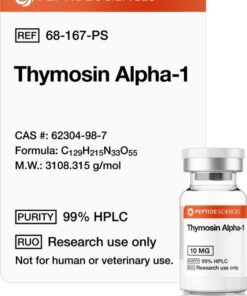
Immune Support Peptides
Thymosin Alpha-1 10mg – Research Grade Peptide | PeptideCore
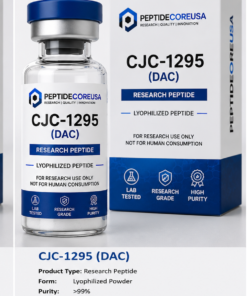
Growth Hormone Peptides
CJC-1295 DAC 5mg Research Peptide | Premium Quality | PeptideCore USA
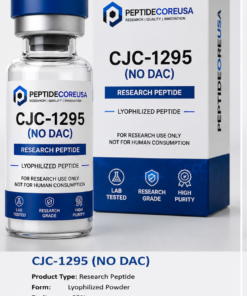
Growth Hormone Peptides
CJC-1295 No DAC 5mg Research Peptide | Premium Quality | PeptideCore USA
Growth Hormone Peptides

Weight Management Peptides
yabohrudrick@gmail.com –
good for growth and body building