
Jul
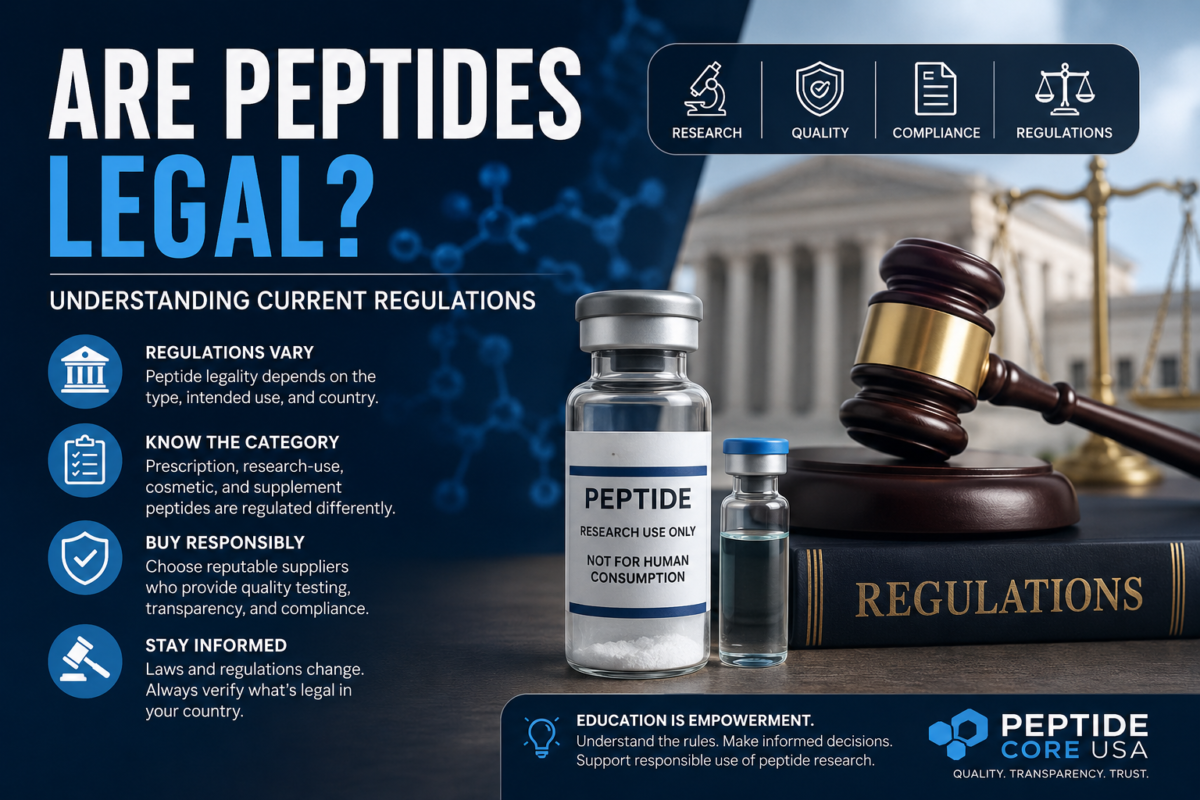
Published by PeptideCoreUSA The popularity of peptides has grown rapidly in recent years as scientists continue to explore their potential applications in medicine, regenerative science, sports performance, healthy aging, and metabolic health. As interest increases, one of the most common questions consumers ask is: “Are peptides legal?” The answer isn’t as simple as yes or no. The legal status of peptides depends on several factors, including the specific peptide, its intended use, how it is marketed, and the laws of the country where it is sold or used. In this guide, we’ll explain how peptide regulations work, what consumers should know before purchasing peptide products, and how to buy from reputable suppliers. What Are Peptides? Peptides are short chains of amino acids that act as signaling molecules throughout the body. They naturally occur in humans and play important roles in processes such as: Scientists continue to study peptides for a wide range of potential therapeutic applications, making them one of the fastest-growing areas of biomedical research. Are Peptides Legal? The legality of peptides depends on how the product is classified and intended to be used. In general, peptides may fall into several categories: Each category is regulated differently. Simply put, not every peptide is treated the same under the law. Why Different Peptides Have Different Regulations Every peptide has its own scientific profile and regulatory pathway. Some peptides have been approved as prescription medications after extensive clinical testing. Others remain investigational compounds that researchers are still studying. Many peptides sold online are marketed for laboratory or research purposes rather than for human consumption. Because of these differences, consumers should always understand exactly what type of product they are purchasing. Research Peptides Many peptides available through specialty suppliers are sold as research compounds. These products are generally intended for laboratory research and scientific investigation. Research peptides are not the same as FDA-approved prescription medications. Their availability does not necessarily mean they have been approved for medical use. Always read product descriptions carefully to understand how a product is intended to be used. Prescription Peptides Several peptides have been approved by regulatory authorities as prescription medications for specific medical conditions. Examples include peptides used in endocrinology, diabetes care, fertility treatment, and other specialized areas of medicine. These medications are available only through licensed healthcare providers and pharmacies in jurisdictions where they are approved. Cosmetic Peptides Certain peptides are commonly used in skincare products. Examples include peptides that are studied for their ability to support collagen production and improve the appearance of aging skin. Cosmetic peptides are generally regulated under cosmetic product regulations rather than pharmaceutical laws. Dietary Supplement Peptides Not every product containing the word “peptide” is regulated as a drug. For example, collagen peptides found in protein powders and nutritional supplements are generally regulated differently from therapeutic peptides. This often causes confusion among consumers. Always distinguish between nutritional peptides and bioactive research peptides. Understanding FDA Regulations In the United States, the Food and Drug Administration (FDA) regulates prescription drugs, biologics, dietary supplements, cosmetics, and medical devices. Some peptides have received FDA approval for specific medical uses after demonstrating safety and effectiveness through clinical trials. Many others remain under investigation and have not been approved for treating diseases. Consumers should avoid assuming that every peptide available online has received FDA approval. Why Some Peptides Require a Prescription Prescription requirements exist to help ensure that medications are used safely and appropriately. Healthcare providers evaluate: Certain peptide medications therefore require professional supervision. International Regulations Peptide regulations vary significantly around the world. Some countries allow broader access to certain peptide products. Others restrict many peptides to prescription-only use or prohibit certain compounds altogether. Before purchasing peptides internationally, consumers should familiarize themselves with local laws and import requirements. Are Peptides Allowed in Sports? Competitive athletes should exercise caution. Some peptides are prohibited under anti-doping rules established by sports governing bodies. Athletes participating in tested competitions should always verify the current status of any substance before use. Failure to do so could result in anti-doping violations. How to Buy Peptides Responsibly Whether purchasing peptides for research purposes or other lawful uses, responsible consumers should look for suppliers that emphasize transparency and quality. Consider choosing suppliers that provide: Avoid suppliers making unrealistic promises or claiming that peptides cure, prevent, or treat diseases without appropriate regulatory approval. Red Flags to Watch For When shopping online, be cautious if a seller: Quality and transparency should always take priority over price alone. Frequently Asked Questions Can I legally buy peptides online? The answer depends on the specific peptide, your location, and applicable laws. Some products may be sold for research purposes, while others are available only by prescription. Are research peptides approved medicines? No. Research peptides are generally intended for laboratory use and should not be assumed to be approved medical treatments. Why do regulations differ? Each peptide has unique characteristics, research data, and intended uses. Regulatory agencies evaluate them individually. Can peptides be shipped internationally? International shipping depends on the laws of both the exporting and importing countries. Buyers are responsible for understanding applicable regulations. Are all peptides prescription drugs? No. Some peptides are approved prescription medications, while others are research compounds, cosmetic ingredients, or nutritional peptides. Why Quality Matters More Than Ever As the peptide market continues to grow, choosing a reputable supplier becomes increasingly important. Responsible companies invest in: Consumers should take time to research suppliers before making purchasing decisions. Final Thoughts The legal status of peptides is complex because different peptides are regulated in different ways depending on their intended use, scientific evidence, and applicable laws. Understanding these distinctions helps consumers make informed, responsible decisions. If you’re considering purchasing peptide products, prioritize education, verify product quality, understand the laws that apply in your jurisdiction, and seek guidance from qualified healthcare professionals when appropriate. At PeptideCoreUSA, we are committed to providing educational resources and maintaining high standards of quality, transparency, and customer service. We encourage every customer to stay informed and make responsible decisions based on reliable […]